

Feature image by aussiegall from Sydney, Australia.
It’s no surprise that at Aussie Tiny Tales we love bees. We released an entire month of bee podcast episodes in celebration of this love! But the blue banded bee has to be one of our favourites. These gorgeous and very necessary pollinators play an important role in our environment, and anything we can do with our kids to create a safe space for them is well worth it. In this blog, we’ll share some basic facts about this bee species, some ways you can continue learning about them, and how you can support their populations.
But first of all, why does pollination matter?
If you’re not quite sure why pollination matters, never fear! I’m going to explain why ‘pollination’ is a term you hear a lot of gardeners and conservationists use.
What is pollination?
Pollination is basically plant breeding! Pollination involves transferring pollen from the male organs of a plant to the female, leading to plant reproduction. This process enables fertilisation and the production of seeds. Some plants have both female and male organs on the same plant, whilst others have female and male plants that are completely separate. Pollinating birds and insects assist in moving pollen between these organs. The design and scent of flowers attract pollinators to assist in this process.
Why gardener’s love pollinators
Now you know what pollination is you might already have an idea as to why gardeners love pollinators! Pollination turns flowers into fruits and vegetables. Fun fact: without pollinators, you don’t grow food. So you’ll often see gardener’s on the lookout for pollinators of all kinds AND you’ll see them plant flowering plants in amongst their fruit and vegetable crops to assist in attracting more pollinators to their gardens. They want and need these little bugs to swing on through and get to work pollinating, so anything gardener’s can do to encourage their activity, they’ll do!
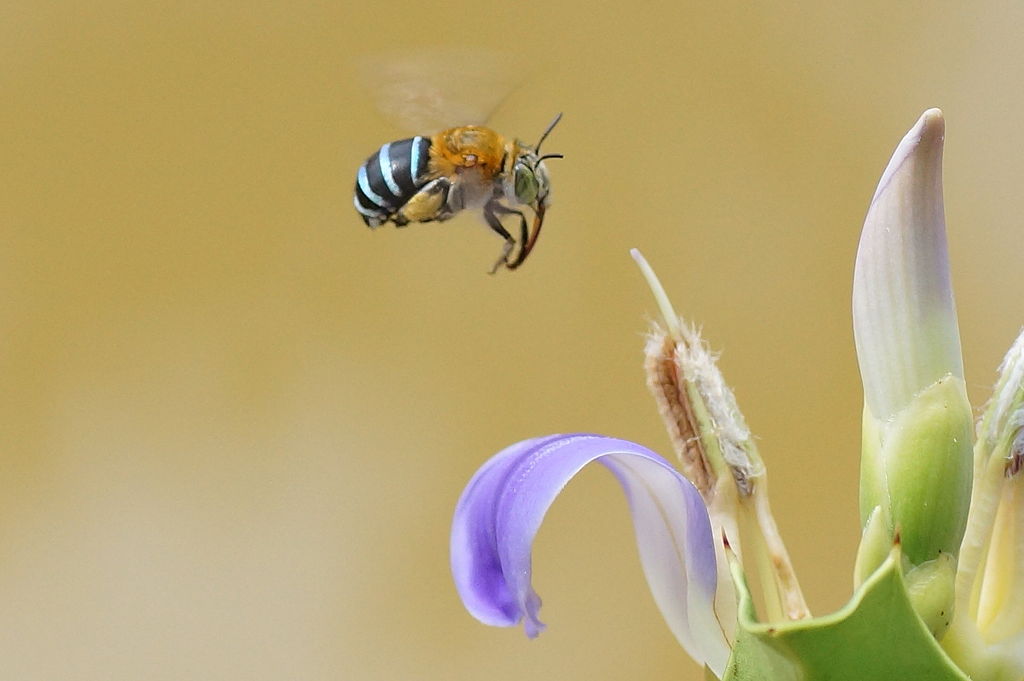
Image by Vengolis
Why conservationists love pollinators
Conservationists also love that pollinators encourage the growth of fruits and vegetables across our ecosystems, not just in our homes and gardens. These pollinators create food not just for humans but for other wildlife as well, maintaining the food systems and hierarchies that balance so well and support wildlife. Pollinators also ensure that the next generation of a plant is created, so the ecosystem is stable, with plenty of plant life to provide a home for animals.
Pollinators are also prey for other species, so help in maintaining the delicate food systems that keep our ecosystems operational.
So you can see now why pollinators, like the blue-banded bee, are so popular (and necessary!). Aside from their cuteness though, let’s be real!
Fact 1: blue banded bees are endemic to Australia
Australia is the homeland of many weird, wonderful, and unique creatures. Our environments have encouraged species of animals to adapt in all kinds of ways, and that’s why so many people find our wildlife so interesting. So you know when a species is Aussie, it’s going to be good, and have various unique features that allow it to survive in our climates. You won’t be finding a blue banded bee in the snowy fields of Canada nor the deserts of Africa! These guys are uniquely Australian.
When people think of bees, most tend to think of…honey! But fun fact: honey bees are not native (honey bees are from Europe). And when they come to a flower, they are generally coming to take nectar back for their hive, of which honey is a (delicious) by-product. They’re less focused on pollinating.
Native bees, like the blue-banded bee, however, are more into pollination and are thus super critical to protect. The blue banded bee actually lives in a mud hole in the ground, not a hive that we usually associate with honey because, well, they don’t make honey! See how different our animals are down under?
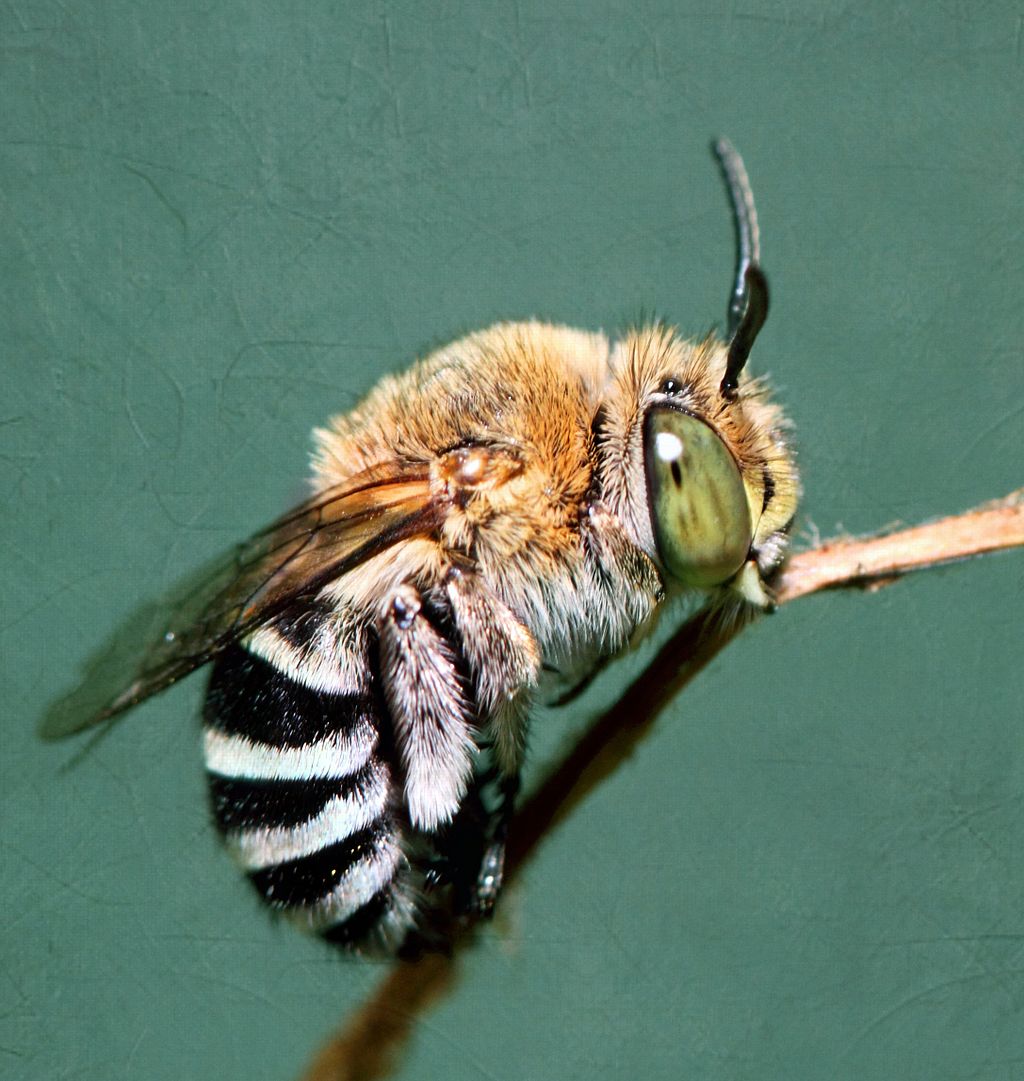
Pro identification tip: male blue banded bees have five bands around their abdomen, whereas females only have four.
🛑 Hold up! Bees sting. I don’t want them near my home and kids!
Now, of course, no one wants to be stung by a bee. Many of us have been brought up with the fear of bees, and usually, it stems from being stung as a child. In most cases, these stinging incidents occur when the bees feel threatened by you, so they turn to aggression to protect themselves. Introduced European honey bees often sting in an attempt to protect their hive and are generally more aggressive (which is why you want to keep a good distance from a hive and if you are getting close to one, you wear protective clothing).
The blue banded bee has the capability to sting, but is far less aggressive than the typical honey bee as it doesn’t have a hive to protect. Where a honey bee sting is also quite painful, a blue banded bee sting isn’t anywhere near as painful.
The key is leaving bees to do their thing. By giving them adequate space, staying back and staying still, you’ll find the bees will take a few mins to visit a flower and move on without causing a fuss. Don’t give them a reason to think you’ll freak out and attack them. Calm and collected is the aim of the game!
Fact 2: blue banded bees use buzz pollination
Speaking of unique features, these bees use buzz pollination as their method of pollination. Basically, it means they vibrate their body to release pollen as they fly from flower to flower. This is significant because certain plant types are pollinated more efficiently when this method is applied, and many of these are Australian natives. What you might not notice about flowers until you compare them side by side is just how varied their shapes are, and thus, the different pollinators that essentially fit inside these flowers in order to pollinate them. Some flowers have a long and skinny design, perfect for a bird with a long and skinny beak. Other flowers are more open, meaning there’s a larger array of pollinators that could pollinate them. These design differences is what makes nature so unique. Buzz pollination helps blue banded bees get pollen into hard-to-reach places, so more pollination can take place. Isn’t this amazing!?
Fact 3: blue banded bees live in a hole in the ground
I’ve mentioned honey bees a few times, but one major difference between their populations and the blue banded bee is the kind of home it lives in. European honey bees live in a hive, with a large family of bees. Whereas blue banded bees are solitary creatures that live in a hole in the ground. Females dig a hole in mud, soft sandstone or mortar by using their jaws. They often dig near other females so a small community of singular bees can sometimes be found together.
- The 5 Most-Loved Aussie Tiny Tales Episodes (so far!)
- Now on YouTube!

- Free fun for kids: 5 ways to teach your kids about conservation
How to support bees
Don’t spray your lawn with pesticides
I’m sad to break it to you, but lawns are some of the least biodiverse ecosystems in our world. They’re about as ecologically diverse as a patch of concrete, to put it bluntly. We need to change the culture of only growing lawn. This will be a tough one! The general population deeply desires a great green lawn to maintain, but we need to educate homeowners on the beauty and benefits of switching the lawn out for a wild garden. It may not be quite as neat and symmetrical as a lawn, but it’s more beneficial for our native animals like bees. And ultimately for us too!
Switch your lawn out for wildflowers, native grasses or clover
So if the lawn is so lacking in biodiversity we need alternatives! More nature-friendly alternatives include growing wildflowers, native grasses or clover, all of which require very little in the way of your time and do not need any pesticides.
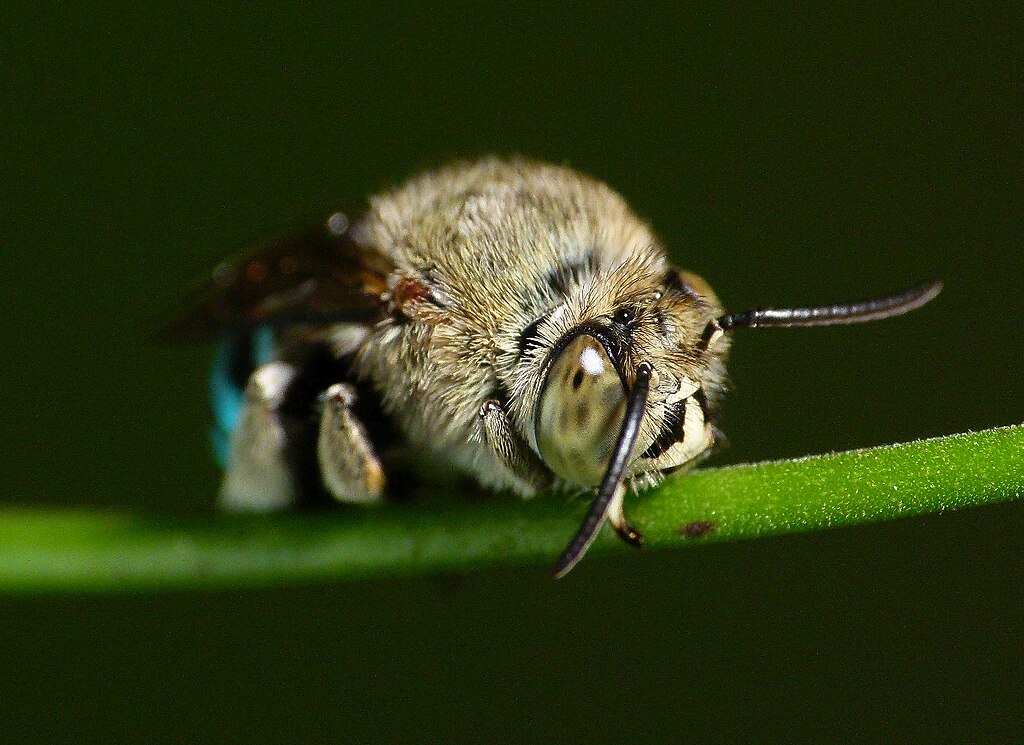
Image: Shyamal
Leave bees alone
If you do see a bee around your home or yard, keep your hands to yourself, stay still, and let it do its thing unhindered. Avoid giving the bee any reason to feel like it needs to protect itself. Getting freaked out, trying to move it away, or touch it will likely lead to bee aggression. Be calm, still, and let it pass through. This is a really important lesson for kids who are some of the most likely to be stung by any species of bee.
Plant specific plant species
Native bees of all types can favour specific native plants and some introduced species over others. Here are a few that you can grow to help attract bee populations in and around your home or community.
Where to learn more
Keen to encourage your kids love of sustainability and build their language skills? Check out the Aussie Tiny Tales podcast. Enjoy short stories about Aussie animals with undertones of education, sustainability and protecting the planet.
 Aussie Tiny Tales
Leave a comment